A reminder that if you’re a person with a disability living on a low income in BC, DABC can help you file your taxes for the 2025 tax year and previous years!
Did you know that we offer drop-off tax services, for faster support? 💡If you have all of your tax slips ready and your tax situation is simple, you can bring your tax slips and ID to our office (1450-605 Robson St, Vancouver) and pick up your package once your taxes have been completed.
Tax AID DABC also offers one-on-one tax filing assistance in person, by phone, and by video conference. We can also help you gather the documents necessary to file your taxes. Book an appointment: https://taxaiddabc.org/tax-appointment-2/
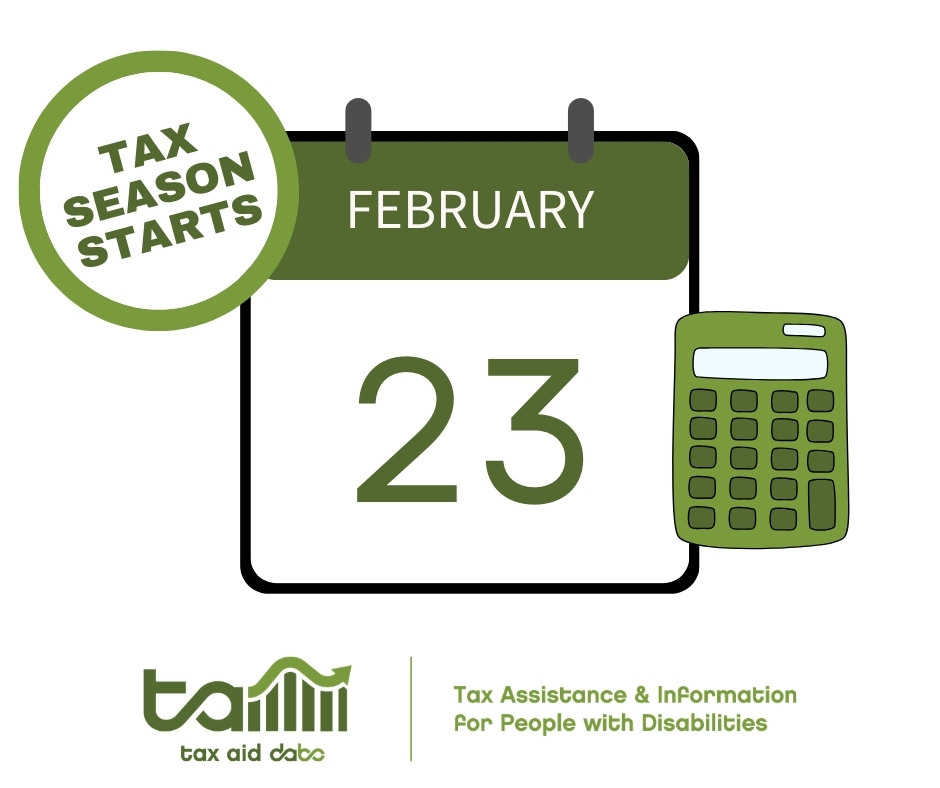
Tax Season is almost here! The CRA will re-open online filing on February 23rd, 2026.
Need help filing your taxes for the 2025 tax year (or previous years)?
Tax AID DABC offers one-on-one tax filing assistance in person, by phone, and by video conference. If you are a person with a disability living in BC on a low income, we can help with filings for current and previous years. We can also help you gather the documents necessary to file your taxes.
To access our online booking service or for contact info, please visit our website: Book your tax appointment.
DABC has signed on to the following statement from the National Disability Network regarding Budget 2025.
You can also download the statement in English here and in French here.
For immediate release – Ottawa, November 6, 2025
Budget 2025 Leaves 27% of Canadians Without a Plan to Participate in the Economy
Budget 2025 takes some steps to improve access but fails to recognize the economic imperative of including people with disabilities in Canada’s economy. People with disabilities (27% of Canadians aged 15 and over) contribute as workers, entrepreneurs, and consumers, yet remain excluded from meaningful economic participation. This budget provides no clear roadmap to enable this participation, offers no new adequacy funding for the Canada Disability Benefit, and creates a potential risk to disability programs given significant savings targets at Employment and Social Development Canada.
What the budget includes
Steps to ease benefit access, including simplified tax filing for low-income Canadians
Measures to support Disability Tax Credit (DTC) medical certification
Signals that the Canada Disability Benefit (CDB) may become ‘exempt from income’ for qualifying for other benefits.
Measures to address negative effects on the value of the DTC as a result of reductions to marginal tax rates
We are pleased with these measures which should reduce some access barriers. However, without adequate benefits and supports, people with disabilities cannot fully participate in the economy.
What’s missing and what’s at risk
No commitment to increase the Canada Disability Benefit (CDB)
ESDC directed to achieve significant savings with no clarity on which programs face cuts (creating potential risk to disability-related programs)
Eligibility for the Canada Disability Benefit (CDB) remains tied to the restrictive Disability Tax Credit (DTC)
Major federal housing and infrastructure investments lack clear, measurable accessibility requirements
What the National Disability Network is calling for
The National Disability Network calls on the federal government to:
Publish a plan for the Canada Disability Benefit outlining a clear timeline for a fully funded and adequate benefit
Broaden CDB eligibility beyond the Disability Tax Credit through co-design with disability-led organizations
Ensure provincial and territorial governments do not claw back the CDB by reducing provincial and territorial disability benefits, so people receive the full value of the CDB
Embed measurable accessibility requirements across all major federal investments
Clarify the impact of ESDC program reductions and consult disability-led organizations consistent with CRPD Article 4.3, and advance Articles 12 and 19 by protecting legal capacity and funding community-based supports
The Government of Canada cannot advance its growth and prosperity agenda – and Canada cannot reach its full economic potential – if people with disabilities continue to be undervalued and excluded.
30-
Alliance for Equality of Blind Canadians
Canadian Association of the Deaf (CAD-ASC)
Autism Alliance of Canada | Alliance canadienne de l’autisme
Canadian Cultural Society of the Deaf
Canadian Down Syndrome Society
CCRW
CNIB
Council of Canadians with Disabilities
Daily Bread Food Bank
Disability Without Poverty
Environmental Health Association of Canada
Environmental Health Association of Québec
L’Arche Canada
March of Dimes Canada
Muscular Dystrophy Canada
People First of Canada
Plan Institute
Realize Canada
Rick Hansen Foundation
Spinal Cord Injury Canada
Thunder Bay & District Injured Workers Support Group
Wavefront Centre for Communication Accessibility
Inclusion Canada
Independent Living Canada
Indigenous Disability Canada
Disability Alliance BC
About the National Disability Network
The National Disability Network (NDN) is a pan-Canadian coalition of over 40 member organizations committed to advancing inclusion, accessibility, and equity for people with disabilities in Canada. The NDN advocates for systemic change through collaborative policy development, government engagement, and community mobilization. It operates on the principle of “nothing about us, without us,” ensuring that people with disabilities are meaningfully involved in shaping the policies and programs that affect their lives.
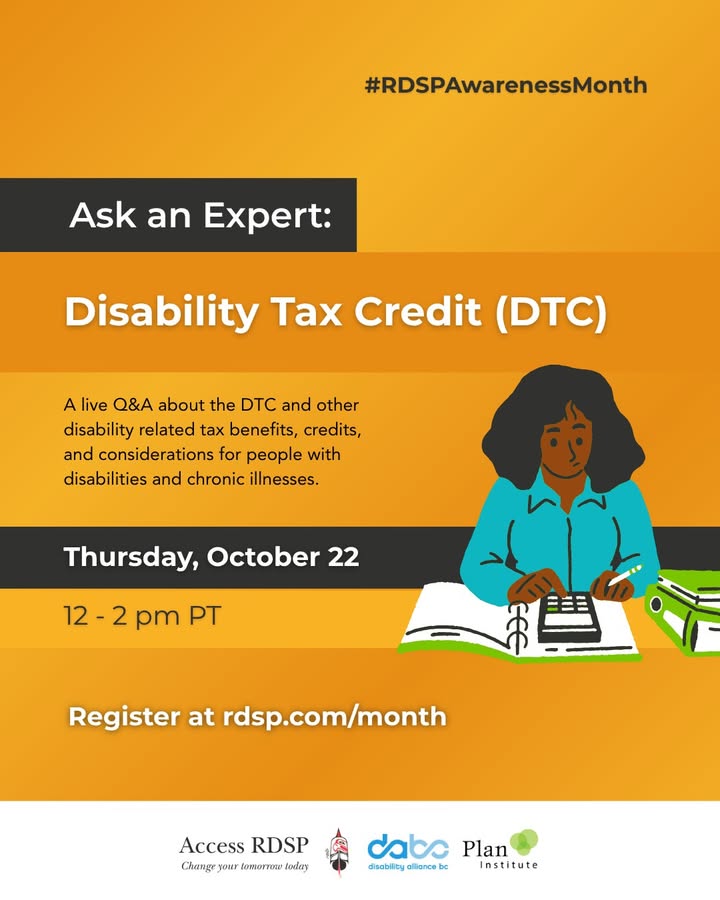
Ask our experts your questions about the Disability Tax Credit (DTC)! Getting DTC approval is a big step toward starting your Registered Disability Savings Plan