This RDSP Awareness Month, we’ve emphasized that there’s more to the Disability Tax Credit (DTC) and Registered Disability Savings Plan (RDSP) than you think. We’ve published blog posts on topics like the SDSP (an RDSP option for shortened life expectancy) and what the 2027 DTC changes mean for Canadians with disabilities. Alongside our Access RDSP partners, BCANDS/IDC and Plan Institute, we have held two Ask the Expert sessions: one on the DTC, and the other on the RDSP.
We’ve also amplified our request for support for our DTC Medical Fees Fund. Donating to this mutual aid fund means you’re directly helping people to access the DTC, by covering the fees charged by medical practitioners for filling out the application. Learn more here: Cover the Cost.
To close out the month, we’re sharing some key resources that can help you learn more about and access the DTC and RDSP.
RDSP.com: Find general information about the DTC and RDSP and the Access RDSP partnership, and access a variety of resources and guides.
RDSP Calculator: By answering a few simple questions, the RDSP Calculator can help you project the estimated future value of an RDSP, and the approximate value of future withdrawal payments.
My DTC: An online tool developed by DABC. It includes in-depth guides for both applicants and medical practitioners on DTC related benefits, eligibility, and the overall process, as well as tools to help with applying.
Mon CIPH: The French language version of My DTC, developed in partnership with Finautonome.
Disability Benefits Compass: Use this resource to help guide you through the DTC, RDSP, Persons with Disability (PWD) designation, and the Canada Pension Plan Disability (CPP-D) benefit.
Benefits Wayfinder: This Canada-wide tool is available to help you find government benefits applicable to you and is not disability-focused.
DABC’s Help Sheet #14: The Disability Tax Credit and Help Sheet #15: The Registered Disability Savings Plan. Find them in English, Arabic, Persian, Punjabi and Spanish languages on our website: Help Sheets. These self-help guides explain the DTC and RDSP, and how to apply for them.
We hope you’ve found some of the information and resources shared this month to be helpful. Remember: There’s more to the DTC and RDSP than you think!
The RDSP was designed as a long-term financial tool for people with the Disability Tax Credit, but life doesn’t always follow a long-term plan. The Registered Disability Savings Plan is often associated with long term savings, government grants and bonds, and planning for the future. However, for an RDSP beneficiary with a shortened life expectancy of five years or less, there is an important option that many families don’t know about: the Specified Disability Savings Plan (SDSP).
An SDSP is a special designation that can provide greater flexibility in accessing money already saved in an RDSP. It can be important when the purpose of financial planning shifts from long term savings to making resources available during the beneficiary’s lifetime.
To qualify for an SDSP, a licensed doctor or a nurse practitioner can certify in writing that a person with a disability is unlikely to survive more than five years. The RDSP holder then makes the SDSP selection with the financial institution that is administering the plan for them. The person with the RDSP can either keep the RDSP under the normal specified year rules, or they can elect to turn their RDSP into an SDSP.
Specified year RDSP vs. SDSP:
An RDSP does not automatically become an SDSP without the beneficiary’s permission. When a shortened life expectancy is certified by the doctor or nurse practitioner, the RDSP can remain in an RDSP during a specified year, or the holder can choose to have it turn into an SDSP. Understanding the difference between these options is an important part of making an informed decision.
A specified year RDSP can provide significant withdrawal flexibility, while the SDSP provides its own set of rules intended to allow greater access to the plan without the usual proportional repayment of the assistance holdback amount.
Under the regular RDSP rules, early withdrawals can trigger a proportional repayment of grants and bonds that were paid into the plan in the preceding 10 years. Generally, for every $1 withdrawn, $3 of grants and bonds can become subject to repayment up to the applicable assistance holdback amount.
The SDSP provides an important exception; an SDSP is important because early withdrawals don’t trigger the repayment assistance holdback amount (i.e. grants and bonds that are subject to the 10-year repayment rules) within the SDSP limits.
Generally, the SDSP permits up to $10,000 of taxable RDSP withdrawals per year without triggering the repayment of the assistance holdback amount. There are circumstances where the Lifetime Disability Assistance Payment (LDAP) formula requires a larger amount to be paid, in which case the $10,000 limit does not apply in the same way.
Things to Consider about the SDSP:
Once you elect to turn your RDSP into an SDSP, no further contributions can be made to this plan. This plan can also not receive new Canada Disability Saving Grants or Disability Savings Bonds. The beneficiary cannot accumulate new grant or bond carry forward amounts under the SDSP and payments from the plan must begin within the applicable time frame.
For example, a family may have an RDSP with significant government contributions and a history of making regular contributions. If the beneficiary develops a condition associated with a shorter life expectancy, the family may need to consider whether maintaining the RDSP’s ability to receive future contributions and incentives is more important than having the additional withdrawal flexibility provided by the SDSP.
Before making an SDSP election, it can be worthwhile to speak with the RDSP issuer and a financial planner, tax professional, or other qualified advisor who understands the RDSP rules.
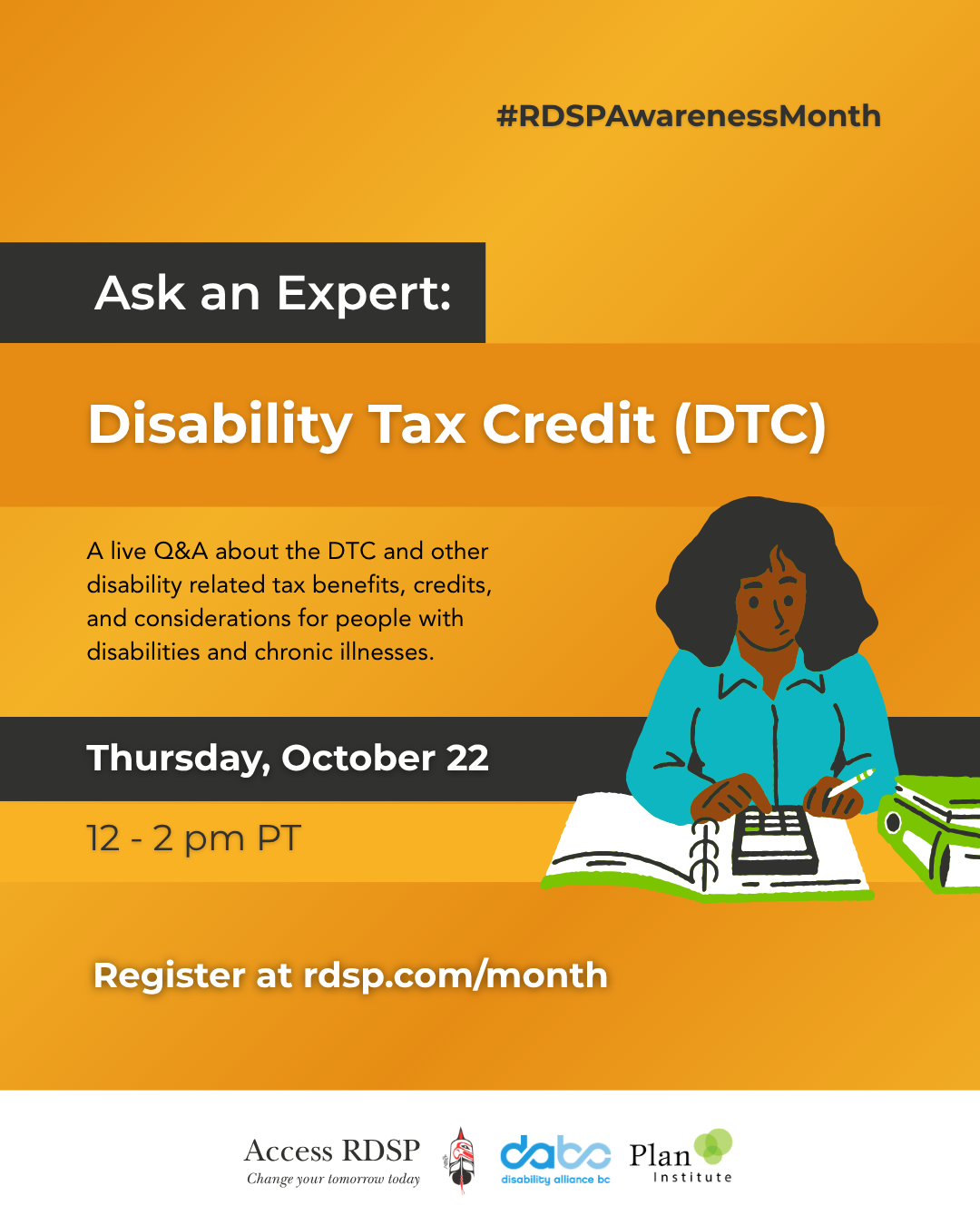
Ask our experts your questions about the Disability Tax Credit (DTC)!
Getting DTC approval is a big step toward starting your Registered Disability Savings Plan (RDSP). Join us on October 22 for a live Q&A (webinar) about the DTC and the benefits you can access with approval.
This #RDSPAwarenessMonth, don’t miss the chance to learn what you may be eligible for.
Error validating access token: The session has been invalidated because the user changed their password or Facebook has changed the session for security reasons.