Disability Alliance BC (DABC)’s nationally recognized Right Fit Program will lose its federal funding as of April 1, 2026, forcing the program to close and leaving hundreds of wheelchair users without critical housing support.
To highlight the urgent impact of this closure, DABC are inviting the media and any affected community members to attend a press conference on Thursday, April 2 at 12:00 PM at the Harmony Building (1451 East 12th Avenue, Vancouver). Harmony is a Brightside Homes development in the Grandview-Woodland neighbourhood, featuring more than 30 accessible units and housing several Right Fit clients. Right Fit clients will be available for interviews.
Position: Housing Navigator Open: March 30, 2026 Closes: April 10, 2026 Location: Victoria (Capital Regional District) Category: Community and Social Services Job Type: Full-time or Part-time Salary: $54,000
Who We Are
Since 1977, Disability Alliance BC (DABC) has been a provincial, cross-disability voice in British Columbia. We are a non-profit, charitable organization that champion issues impacting the lives of people with disabilities. Our mission is to promote a more inclusive and equitable society for people with all disabilities through direct services, community partnerships, systemic advocacy, research, and publications. through our direct services, community partnerships, advocacy, research and publications.
Launched in 2017, the Right Fit program (RFP) is a multi-partner service designed to address the shortage of wheelchair accessible housing in British Columbia. The program matches affordable, accessible homes and independent living supports with people who need them.
Program Description
The Right Fit Program is led by Disability Alliance BC in partnership with the Individualized Funding Resource Centre Society (IFRC) in Metro Vancouver and the Victoria Disability Resource Centre (VDRC) in the Capital Regional District. The program provides peer-led navigation support to wheelchair users and their families, which includes holistic assessments, coordination of disability-related supports (such as home support, equipment, and assistive technology). The Right Fit maintains a comprehensive inventory of accessible units through a standardized Accessibility Checklist. The program also assists housing providers by matching vacant units with wheelchair users who have diverse accessibility needs and are the “right fit” tenants, ensuring the most effective use of accessible housing stock.
Job Description
Disability Alliance BC (DABC) is seeking a Housing Navigator for the Right Fit Program in the Capital Regional District. Working under the direction of DABC’s RFP Program Manager, the Navigator works with clients who are wheelchair users in need of affordable, accessible homes in the Capital Regional District. Additionally, the navigator conducts outreach to housing providers in the region, maintains an inventory of accessible rental units and completes detailed Accessibility Checklists describing accessibility features to match clients.
Key Duties and Responsibilities
Assist eligible participants with finding and applying for accessible housing that meets their needs from start to finish.
Conduct client intakes and holistic assessment of all disability support needs, including home supports, equipment and assistive technology.
Conduct outreach with housing providers to promote the Right Fit Program and identify accessible housing units in the Capital Regional District.
Coordinate with housing providers and building managers to arrange access to units to complete the Accessibility Checklist; undertake site visits to measure and record accessibility features and take photographs.
Maintain an inventory of housing providers and accessible units.
Match clients to housing units.
Facilitate the transition process once a suitable home is found and fast track processes to obtain independent living supports.
Collaborate with government agencies, service providers and client’s support networks
Conduct outreach and participate in public presentations at workshops, conferences, and other events (virtual or in-person) to promote the Right Fit Program in the Capital Regional District
Prepare monthly reports
Perform other duties as assigned
The successful applicant must:
Have post-secondary education in a relevant field such as social work, occupational therapy, community development, or an equivalent combination of education, training and experience.
Experience providing client-centered support, case management, or peer navigation services.
Experience advocating for clients and coordinating services with government agencies, housing providers, and community organizations.
Knowledge and/or experience with accessible housing, accessibility standards, building design, technology and architecture.
Strong verbal and written communication skills.
Excellent interpersonal skills and ability to build trust and maintain supportive relationships with clients across diverse backgrounds.
Ability to act ethically and handle sensitive information with confidentiality.
Experience conducting outreach, community engagement, and public presentations.
Strong organizational, time management, and administrative skills, including the ability to manage multiple client files and prepare reports.
Ability to work independently while collaborating effectively within a team environment.
Proficiency with computers and computer programs, including Microsoft Office software, specifically Excel, Word, Outlook, and client database systems.
A Valid driver’s license, access to a vehicle, and ability to travel within the Capital Regional District.
The following are strong assets for this position:
Experience in the non-profit sector
Experience with a disability and/or supporting people with disabilities
Salary: $54,000, annually, based on 8 hours per workday at 5 days per week. DABC is also open for candidates to apply for this position on a part time basis (minimum 24 hours per week, salary to be prorated accordingly).
This position offers the following benefits after a three-month probationary period:
15 days of paid vacation annually (based on full-time)
18 days of paid sick leave annually (based on full-time)
100% of the cost of extended health and dental care benefit premiums
2 weeks of paid time off during DABC’s annual holiday office closure in December
Employee wellness benefit
Working hours and location
This position can be either full-time at 40 hours per week or part-time, (between 24 and 32 hours) at 8 hours a day (including 1 hour as a paid lunch break) and is a hybrid work opportunity; the successful candidate will be required to work in the Victoria office two or three days a week, and at home the rest of the time. The position may also require occasional travel to other BC communities and beyond.
This position is based in the Capital Regional District, on the traditional territories of the Lekwungen Nations and the W̱SÁNEĆ Nations.
Commitment to Equity
DABC is committed to fostering a respectful, inclusive and equitable workplace which is representative of the community we serve. We welcome those who have demonstrated a commitment to upholding the values of inclusion, anti-ableism, anti-racism and reconciliation. Applications are encouraged from members of groups that are historically disadvantaged and underrepresented, including Indigenous persons, people of colour, and people of all sexual orientations, gender expressions and identities. People with disabilities are especially encouraged to apply. Accommodations are available during the hiring process, upon request.
Importantly, we are looking for people who want to make a long-term commitment to our organization and have a strong desire to uphold the rights and dignities of people with disabilities.
To Apply:
Please submit a resume and brief cover letter addressed to rightfit@dabc.ca using the subject heading “Job Application: Right Fit Housing Navigator”. Inquiries about this position may be emailed to the above noted email address. In the interest of fairness during the recruitment process, meeting requests regarding this position will not be granted. No phone calls, please.
Applications are due no later than 4:30 p.m. on April 10, 2026. DABC welcomes all applications; however, only shortlisted applicants will be contacted for an interview.
Applicants must be legally allowed to work in Canada.
Do you prefer audiobooks and podcasts to print media? Are you already a fan of DABC’s Transition magazine, or have you been meaning to check it out? You’re in luck!
We’re excited to announce that the Fall/Winter 2025 edition of Transition is now available as a podcast on Spotify and Substack. 🎧
The theme of the edition is Following Their Path: How disability trailblazers are guiding today’s advocacy, and it is dedicated to the late Pamela Horton.
Check it out on your favourite platform (search: Transition Magazine Podcast or use the links above) and be sure to follow us so you don’t miss future episodes.
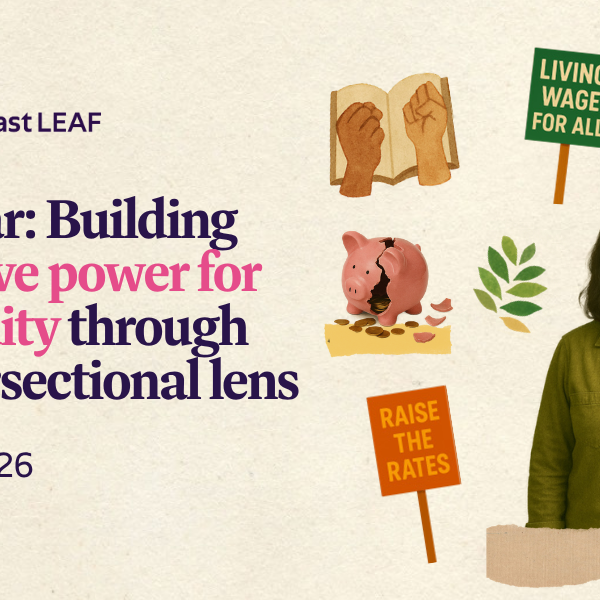
DABC will be speaking at West Coast LEAF's webinar on Building Collective Power for Pay Equity Through an Intersectional Lens. Join us Thursday, April 16