For many Canadians with disabilities and their families, the Disability Tax Credit (DTC) and Registered Disabilities Savings Plan (RDSP) may seem complicated and out of reach. Understanding how these programs work together can make a meaningful difference for planning for the future.
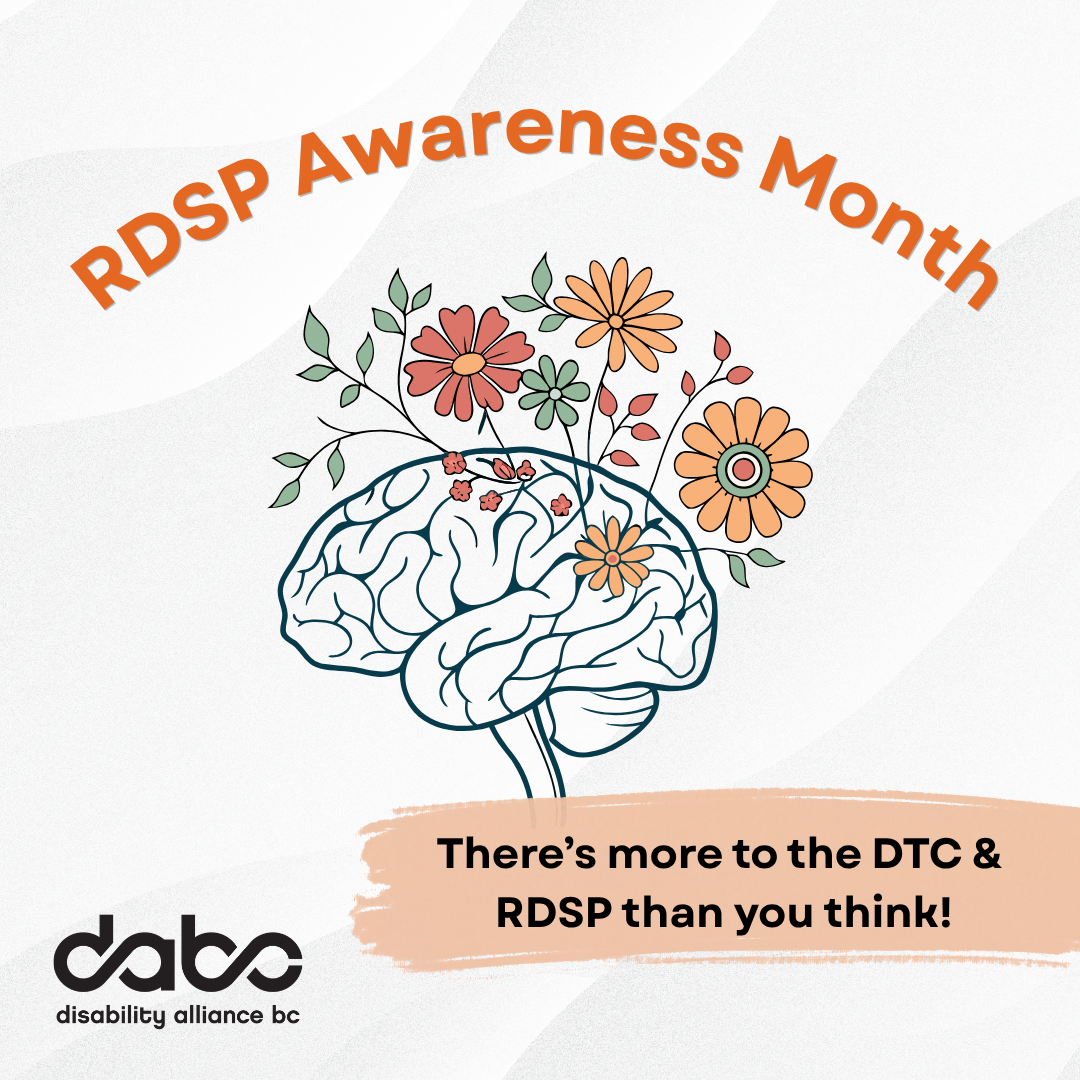
Throughout RDSP Awareness Month in 2026, we’ll be exploring the theme: there’s more to the DTC and RDSP than you think.
The Disability Tax Credit is more than just a tax credit; it can open doors to other federal programs and benefits, including access to the RDSP. The RDSP is also more than just a savings account; it’s a long-term financial planning tool designed to help people with disabilities build financial security, with government grants and bonds adding to personal contributions.
There are also important details that many people just don’t know: eligibility rules which are changing in 2027 to make access easier, contribution and withdrawal strategies, government incentives, beneficiary and holder considerations, deadlines, and special provisions for people whose circumstances may change (for example, those with shortened life expectancies).
This month, we seek to make these programs easier to understand and help British Columbians ask better questions. Whether you are a person with a disability, a parent or caregiver, a family member, a financial professional, service provider, healthcare provider, or someone supporting a friend or loved one, RDSP Awareness Month 2026 is an opportunity to look beyond the basics and discover what you may have been missing.
Follow our social media and check our blog throughout the month to learn more.
After years of anticipation, the Canada Disability Benefit (CDB) was finally made available in July 2025. The benefit was initially proposed as a means to lift people with disabilities out of poverty. Despite significant organizing from advocates across the country, however, there remain issues around the new legislation and its rollout. Here is a look at our thoughts on the CDB so far, and how to prepare to apply for it.
The Canada Disability Benefit remains too little for too few
The CDB offers up to $200/month for up to $2400 a year to recipients of the Disability Tax Credit (DTC) that qualify under restrictive income thresholds. Single individuals, for example, qualify for the full amount if their income falls below $23,000, with a working exemption of $10,000. The benefit gradually reduces until their income rises above $45,000. For more information on income thresholds and to find out how much you might receive, visit the federal government’s benefit estimator.
But while these thresholds were set in place to ensure that the benefit goes to those who need it most, many people who struggle financially are not able to access the payment. Because the income exemption applies only to working income, many people with rental or investment income who still struggle to meet their basic needs are left out of the benefit. As income is measured by taxes that have already been filed, those who have experienced significant income changes in 2025 must wait until after the next tax season to qualify for financial support they may need now.
Some people with disabilities who qualified are still missing their first payment.
There were also complications around initial CDB payments. The government originally miscalculated working income, which left people who qualified early for the benefit with incorrect payment amounts. Service Canada acted swiftly and has already contacted those affected. However, these technical difficulties have caused payment delays that many cannot afford. We have heard from a few clients who are still waiting for their first payment amounts to be readjusted and returned to them.
With the CDB in effect, Albertans with disabilities face more pressure to apply for the Disability Tax Credit
Depending on where you live, applying for the CDB has been especially daunting. One of the central concerns around the CDB has been around how the benefit interacts with existing provincial and territorial disability programs. Most provinces and territories announced that CDB payments would not affect income or disability assistance payments; Alberta is currently the only province to claw-back CDB payments from disability assistance (AISH) payments.
This summer, the Alberta government asked AISH recipients to provide updates on their DTC application status by September 5 or risk a reduction of their disability payments. This measure caused many people who rely on AISH to engage in a difficult, and at times, costly application process without the promise of additional money in their pockets. The Alberta government has agreed to fund medical costs related to applying, but it remains unclear how they will reimburse applicants.
What to do to prepare
While the CDB still has some kinks to work out, it is still the first benefit of its kind—a way for the federal government to provide some needed financial relief to people with disabilities facing exorbitant costs of living.
If you are looking to apply, we recommend making sure you’re as prepared as possible:
To keep up to date on information about the CDB, visit Plan Institute’s website: canadadisabilitybenefit.ca.
The Access RDSP Partnership can help you every step of the way
If you need assistance with any step of the application process, or need help to appeal a decision, contact our Access RDSP Partnership. Services are available within BC and across Canada.
For BC Clients:
For Clients outside of BC:
Disability Alliance BC: Contact Access DTC at dtc@dabc.ca or 604-923-8136
The Disability Tax Credit (DTC) is a non-refundable tax credit that reduces the amount of income tax you owe. You might know that eligible applicants must be approved for the DTC before gaining access to other benefits, like the Registered Disability Savings Plan (RDSP) and the Canada Disability Benefit (CDB). It’s an important benefit—and many people with disabilities face barriers to accessing it because medical practitioners generally charge a fee for filling out their part of the DTC application form.
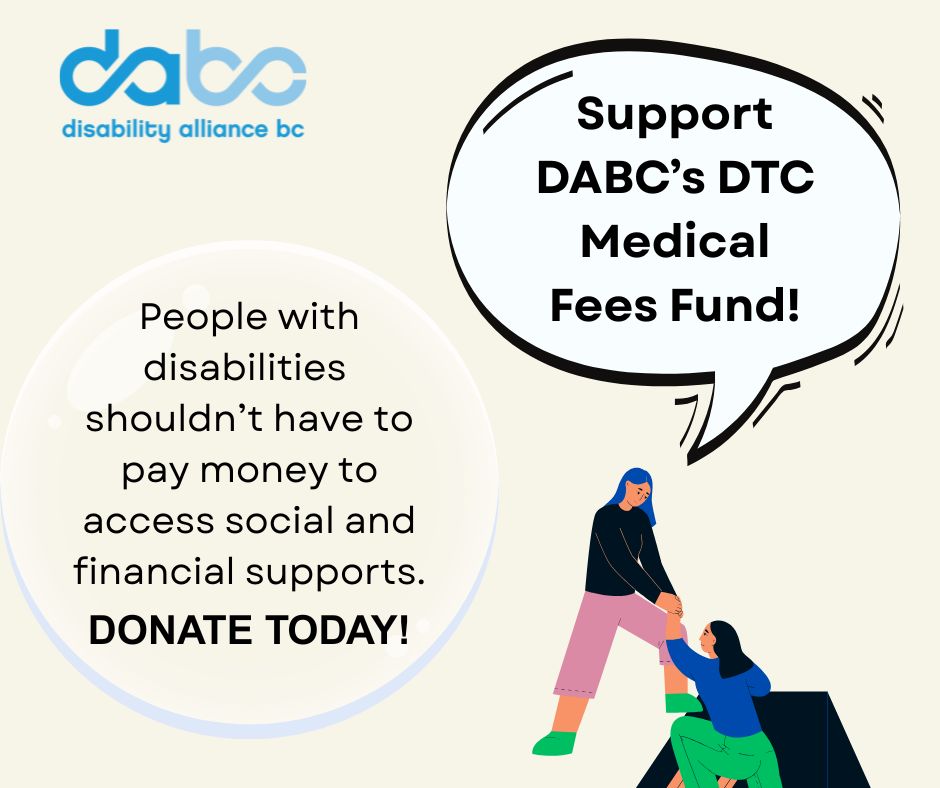
Last October, during RDSP Awareness Month, we launched our DTC Medical Fees Fund—a mutual aid fund that can help eligible applicants cover their DTC medical certification fees. A big thank you to all who have contributed to the Fund so far! It’s very encouraging to see the DABC community providing this support. We’ve now surpassed the $3,200 mark in total funds raised, with 100% of all funds contributed going directly to cover the cost of DTC applicants’ medical certification fees.
From April 17th-May 17th, we accepted applications for our first round of funding. We had very high interest in the fund! While we weren’t able to cover every applicant’s DTC costs this round, we are renewing our call for support this RDSP Awareness Month. We want to help as many people as we can.
Donations of all amounts are welcome, with every contribution of $100-250 covering approximately one applicant’s fee. Our most generous contribution so far has been from a donor providing $1000 to cover a handful of applicants’ fees. Donations through this fund are such a tangible way to know the personal impact of your gift. To make your contribution today, click the following link and scroll to the bottom of the page: DTC Medical Fees Fund | DABC.
Can’t donate? We’d be very appreciative if you could help spread the word!