Trailblazer, Advocate, Friend: Pam Horton

This article was written by Margaret Fraser, and originally appeared in the edition of DABC’s Transition magazine, Following Their Path: How disability trailblazers are guiding today’s advocacy (Fall/Winter 2025).

Read the full edition in PDF format here and in text-only format here.

If you’re interested in contributing to Transition as an individual or an organization, please email transition@dabc.ca.

This edition of Transition Magazine is dedicated to the late Pamela Horton. Pam served on DABC’s board of directors for close to thirty years. If you’d like to support Transition, we have set up a fund in Pam’s name. We so appreciate any contributions.


Pam Horton grew up in North Vancouver in the 1950’s and 60’s with her brother, Mom and Dad. She had an active life, loving the outdoors, mastering a range of crafts and later finding work in the administrative field.

On February 9, 1982, at age 28, she was diagnosed with multiple sclerosis. She often spoke of this as her second birthday.

When the shock began to wear off, her goals changed. Pam wanted to focus on working on behalf of the disability community—first on the North Shore, then Greater Vancouver and ultimately province-wide.

Pam worked extremely hard to maintain her physical health as much as possible, through physiotherapy and mentally through volunteering. She was an excellent collaborator and communicator. She sat on numerous committees and challenged politicians, civil servants and anyone who would listen. She also made many friends.

Co-chairing the Together Against Violence Network on the North Shore was a perfect example of her understanding of intersectional issues for people with disabilities. Pam always prioritized inclusion. Each November, she enlisted her mother, Ruth, to cut purple ribbons—thousands over the years—to raise awareness of the issues close to her heart.

And Pam was not just a “joiner.” Encouraging and creating advisory committees on disability became one of her most far-reaching contributions to change, not only in the general public’s attitudes, but in those involved in government decisions at every level.

She was instrumental in so many changes in transportation that we now take for granted, such as accessible buses and taxis, including education for drivers on how to respectfully and safely assist those with disabilities.

When it came to income security, Pam worked to improve the living situations for the many people who rely on government assistance and programs, addressing problems from rental costs to equipment expenses.

In 1998, the North Shore Disability Resource Centre opened and it continues its work today. Pam and her various teams raised money for a host of initiatives at the centre including public education.

She worked with youth, adults and seniors and was never afraid to speak up on behalf of others.

In the arts, it was her persistence and invincible approach that led to the wheelchair accessible renovation of Centennial Theatre in North Vancouver.

On the quirky side, Pam was known for her love of owls! You may know an owl represents a wise creature–there’s a connection there–and she amassed a collection of owl-related photographs, trinkets, earrings and kitchen gadgets. You name it.

Her ultimate passion was the successful development of Disability Alliance BC. Pam was the first Executive Director and later sat on the Board of Directors for many years. She used her strong voice to advocate across the province for people with all types of disabilities.

Pam took a courageous stand beside Sue Rodriguez. She supported Rodriguez’s trailblazing right-to-die advocacy in the 90s that eventually lead to the creation of Medical Assistance in Dying (MAID) in BC.

And she did so while also articulating the serious concerns about the potential for MAID to be misused around people with disabilities.

What follows are some thoughts from Pam’s friends and colleagues. The world is a much better place because of Pam. After her passing in May of this year, she will be missed by many and forgotten by none.

“Fearless and respected.”

“Gracious with her time and gave generously.”

“Able to retain her dry wit and knowing smile in the most difficult times.”

“Always kind and generous.”

“A good, truthful friend no matter what.”

“A stellar human being who made a tremendous contribution to our communities and, in many respects, changed so many people’s lives for the good.”

“An unflinching advocate for accessibility and the rights of people with disabilities.”

—–

Over the course of her 40-year working life, Margaret Fraser worked in a variety of roles with, and advocated for, people with a broad range of disabilities, frail and isolated seniors, youth at risk, new immigrants and adult literacy groups. She held hands-on roles as well as positions in management, and learned much about how folks progress through life–more than a university education can provide. Originally from Scotland, she immigrated to Canada in 1983. She remains an active volunteer in North Vancouver.
Transition Magazine: Editorial by Christine Gordon

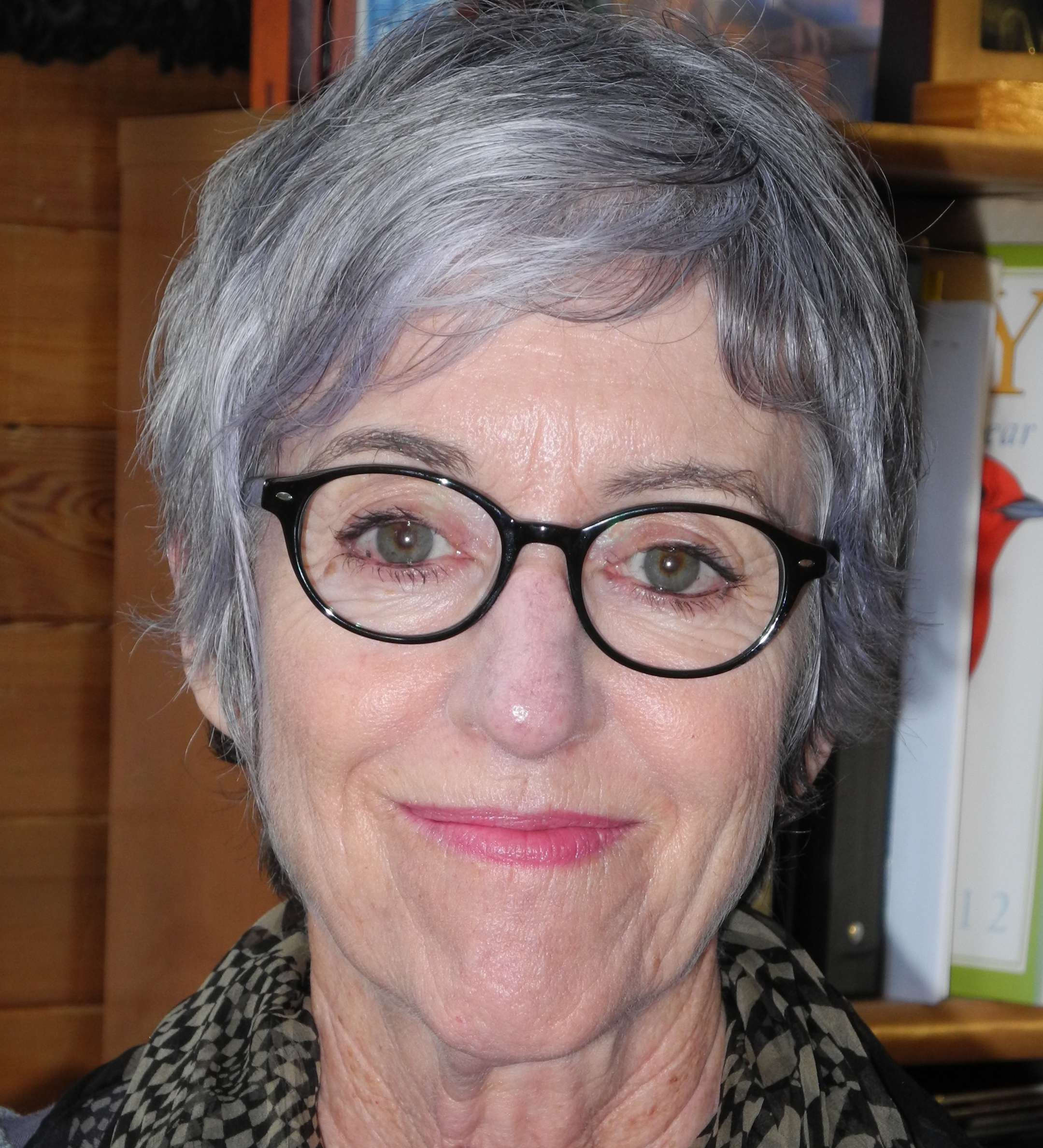
Headshot of Christine Gordon. She has short silver hair and dark glasses. This editorial was written by Christine Gordon, and originally appeared in the edition of DABC’s Transition magazine, Following Their Path: How disability trailblazers are guiding today’s advocacy (Fall/Winter 2025).

Read the full edition in PDF format here and in text-only format here.

If you’re interested in contributing to Transition as an individual or an organization, please email transition@dabc.ca.


This issue of Transition honours some of the trailblazers in the disability rights movement in British Columbia.

The movement is not very old–only a couple of generations–and it has struggled to redefine disability as a social rather than an individual problem, and to wrest control of the definitions of disability away from the medical domain and lodge them squarely in the political and economic world where they rightly belong.

What makes a trailblazer? Generally, it is the force of circumstance which is encountered by individuals who are not content to live within the constraints imposed upon them. Trailblazers always have a clear vision of what the world could be. They are ingenious problem-solvers and fearless advocates. They lead by example and by taking action. In most cases, they are reluctantly thrust into the spotlight because there is a vacuum to be filled and they heed the call. Authentic trailblazers are usually not self-promoters.

In this edition of Transition, Roger Jones reflects on some of the people that he regards as trailblazers, while downplaying his own contributions as a lightning rod for galvanizing new approaches to assistive technology, accessible transportation, individualized funding and economic development. Roger has been an ambassador of the disability movement to power brokers and entrepreneurs and has mentored a whole generation of young people.

Robin Loxton describes the evolution of DABC’s Advocacy Access program and forgets to mention that he was the glue that held everything together for 27 years. His expertise in the byzantine world of disability benefits was unmatched and he applied it tirelessly not only for the individuals that he served, but also in pursuit of systemic changes that would lift people with disabilities out of poverty.

This edition is dedicated to Pam Horton. Pam was a quiet person with steely determination who never said no to an opportunity to speak truth to power. She volunteered for more committees than anyone could dream of and she took every one of them seriously.

Monica Gärtner shares some of her story of living with a genetic disability and evolving as an advocate, writer and performer.
Dave Symington was an artist at heart and he found a way to use music and performance to redefine public perceptions of disability.

Heather McCain’s article describes many home-grown trailblazers converted by the force of circumstance and applying their moral compass and sheer determination to make change.

What can we do to celebrate trailblazers?

First, we must be thankful for their individual contributions and appreciative of their sacrifices.

Then we must recognize that trailblazing means exactly what it says: creating a path forward. If we don’t use a path then we will lose it. A trailblazer’s most fervent wish is to change the world. They demonstrate the power of individual action to do just that. Trailblazers also teach us about the value of persistence which in itself is a synonym for hope. Lasting change must be constantly reinforced at its roots and never taken for granted.

This edition is dedicated to Pam Horton. Pam was a quiet person with steely determination who never said no to an opportunity to speak truth to power.

All of the trailblazers featured in this Transition encouraged and built collective approaches to changing the world. They help us to focus on the fact that individuals, no matter how gifted, are not enough. Sustainable change lies within developing coalitions, associations, organizations and inviting people to join in.

During these troubled and dystopic times, trailblazers might urge us to double down on moral clarity, strategic ingenuity, fearless collective action and the power of the voice of lived experience.

Christine Gordon has had a lifelong commitment to ground-up community development, and law and policy reform that shifts traditional power balances.

In her work with Disability Alliance BC and other organizations, she coordinated the decade long reform of the Adult Guardianship laws, helped to develop the Provincial Respiratory Outreach Program and engineered the creation of Technology for Living. she also coordinated the Equipment and Assistive Technology Initiative, developed the CARMA program and the Right Fit program, initiated the Individualized Funding project and mentored the BC Persons with Aids Society.

She has been actively engaged in health care reform including the Healthy Communities movement, the design of the Medicare Protection Act and the deinstitutionalization of the George Pearson Centre.

Download the latest edition of Transition Magazine!

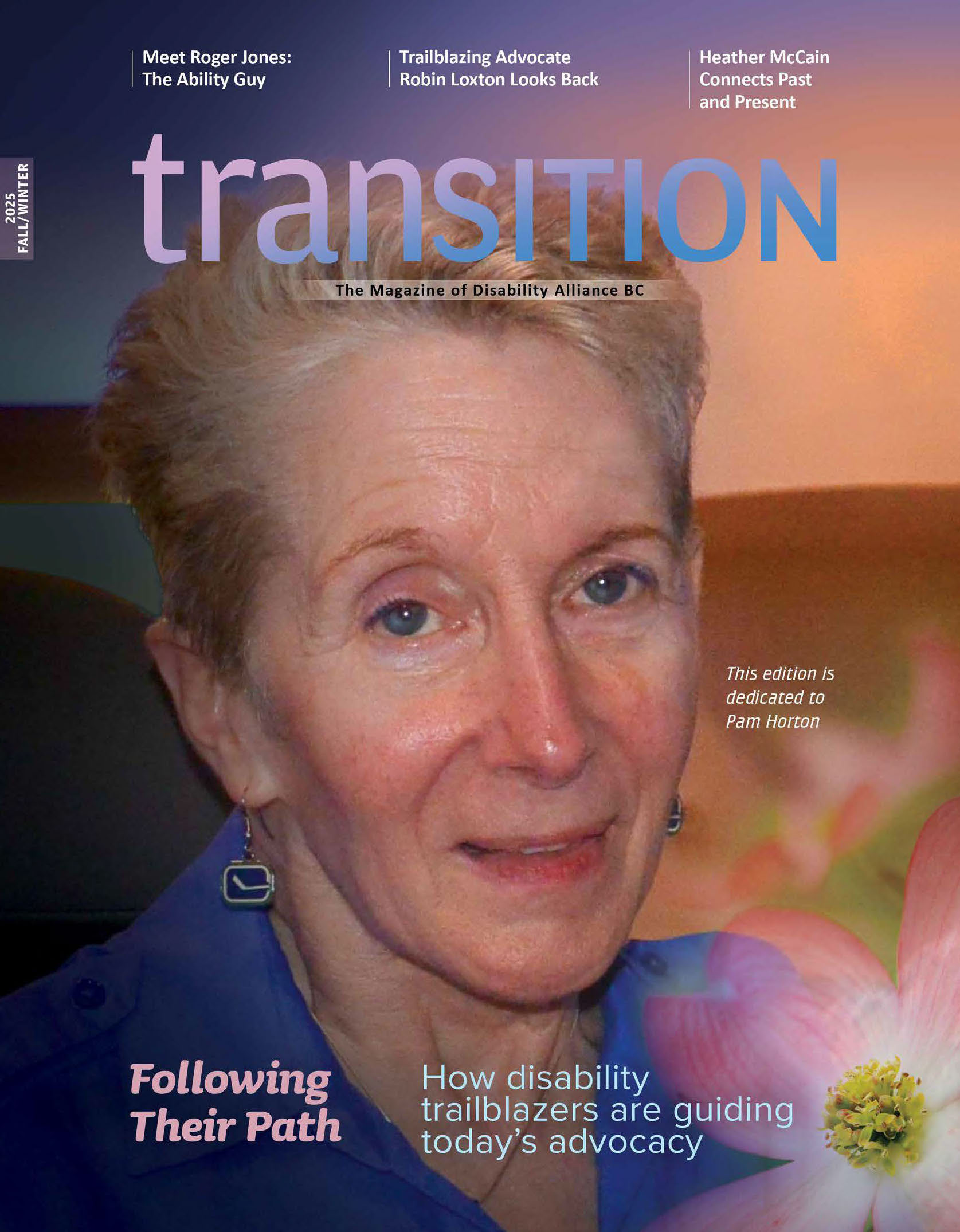
Cover of the Fall/Winter edition of Transition Magazine, featuring a photo of Pam Horton.

The theme of the Fall/Winter 2025 edition of Transition magazine is Following Their Path: How disability trailblazers are guiding today’s advocacy, and it is dedicated to the late Pam Horton.

You can download it from our website in PDF format and text only format.

We’re always happy to consider articles or creative work from our community partners and from people living with a disability. If you’d like to send along your ideas or feedback, email: transition@dabc.ca.