For many Canadians with disabilities and their families, the Disability Tax Credit (DTC) and Registered Disabilities Savings Plan (RDSP) may seem complicated and out of reach. Understanding how these programs work together can make a meaningful difference for planning for the future.
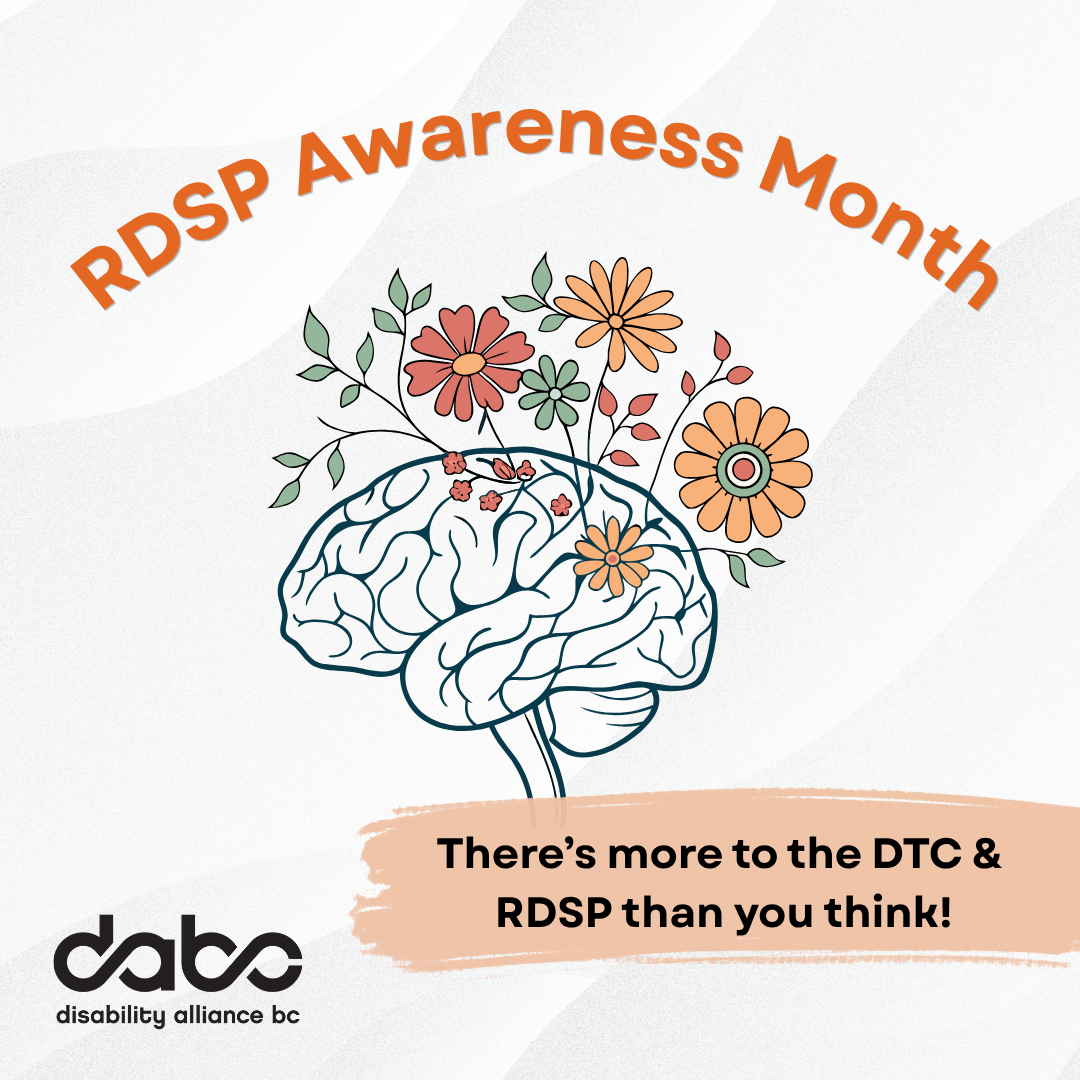
Throughout RDSP Awareness Month in 2026, we’ll be exploring the theme: there’s more to the DTC and RDSP than you think.
The Disability Tax Credit is more than just a tax credit; it can open doors to other federal programs and benefits, including access to the RDSP. The RDSP is also more than just a savings account; it’s a long-term financial planning tool designed to help people with disabilities build financial security, with government grants and bonds adding to personal contributions.
There are also important details that many people just don’t know: eligibility rules which are changing in 2027 to make access easier, contribution and withdrawal strategies, government incentives, beneficiary and holder considerations, deadlines, and special provisions for people whose circumstances may change (for example, those with shortened life expectancies).
This month, we seek to make these programs easier to understand and help British Columbians ask better questions. Whether you are a person with a disability, a parent or caregiver, a family member, a financial professional, service provider, healthcare provider, or someone supporting a friend or loved one, RDSP Awareness Month 2026 is an opportunity to look beyond the basics and discover what you may have been missing.
Follow our social media and check our blog throughout the month to learn more.
The Disability Tax Credit (DTC) is a non-refundable tax credit that reduces the amount of income tax you owe. You might know that eligible applicants must be approved for the DTC before gaining access to other benefits, like the Registered Disability Savings Plan (RDSP) and the Canada Disability Benefit (CDB). It’s an important benefit—and many people with disabilities face barriers to accessing it because medical practitioners generally charge a fee for filling out their part of the DTC application form.
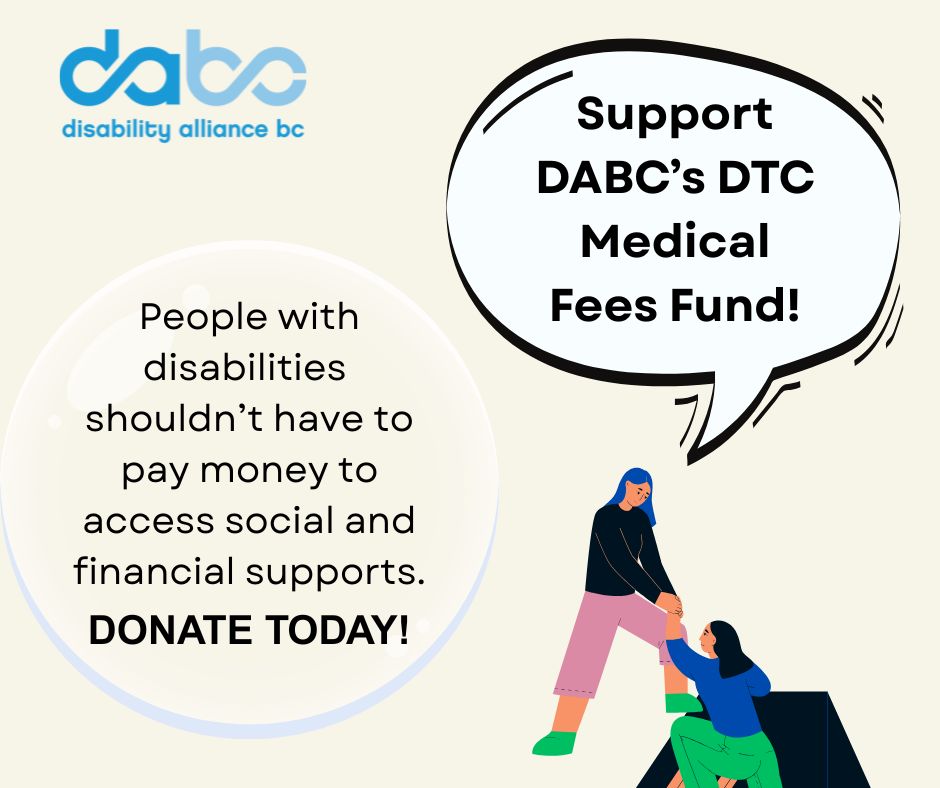
Last October, during RDSP Awareness Month, we launched our DTC Medical Fees Fund—a mutual aid fund that can help eligible applicants cover their DTC medical certification fees. A big thank you to all who have contributed to the Fund so far! It’s very encouraging to see the DABC community providing this support. We’ve now surpassed the $3,200 mark in total funds raised, with 100% of all funds contributed going directly to cover the cost of DTC applicants’ medical certification fees.
From April 17th-May 17th, we accepted applications for our first round of funding. We had very high interest in the fund! While we weren’t able to cover every applicant’s DTC costs this round, we are renewing our call for support this RDSP Awareness Month. We want to help as many people as we can.
Donations of all amounts are welcome, with every contribution of $100-250 covering approximately one applicant’s fee. Our most generous contribution so far has been from a donor providing $1000 to cover a handful of applicants’ fees. Donations through this fund are such a tangible way to know the personal impact of your gift. To make your contribution today, click the following link and scroll to the bottom of the page: DTC Medical Fees Fund | DABC.
Can’t donate? We’d be very appreciative if you could help spread the word!
The Access RDSP partnership between DABC, Plan Institute and BC Aboriginal Network on Disability Society (BCANDS) has had years of experience providing free navigational supports through income tax filing, the Disability Tax Credit (DTC), Registered Disability Savings Plan (RDSP) and other financial planning matters. For RDSP Awareness Month, our team of experts are hosting two “Ask an Expert” sessions, where you can learn and ask any question about the DTC, RDSP, taxes and other financial topics.
Join us again this year:
Ask an Expert Week 1: Disability Tax Credit and Tax Topics
When: Wednesday, October 22nd, 2025, at 12 PM Pacific Time.