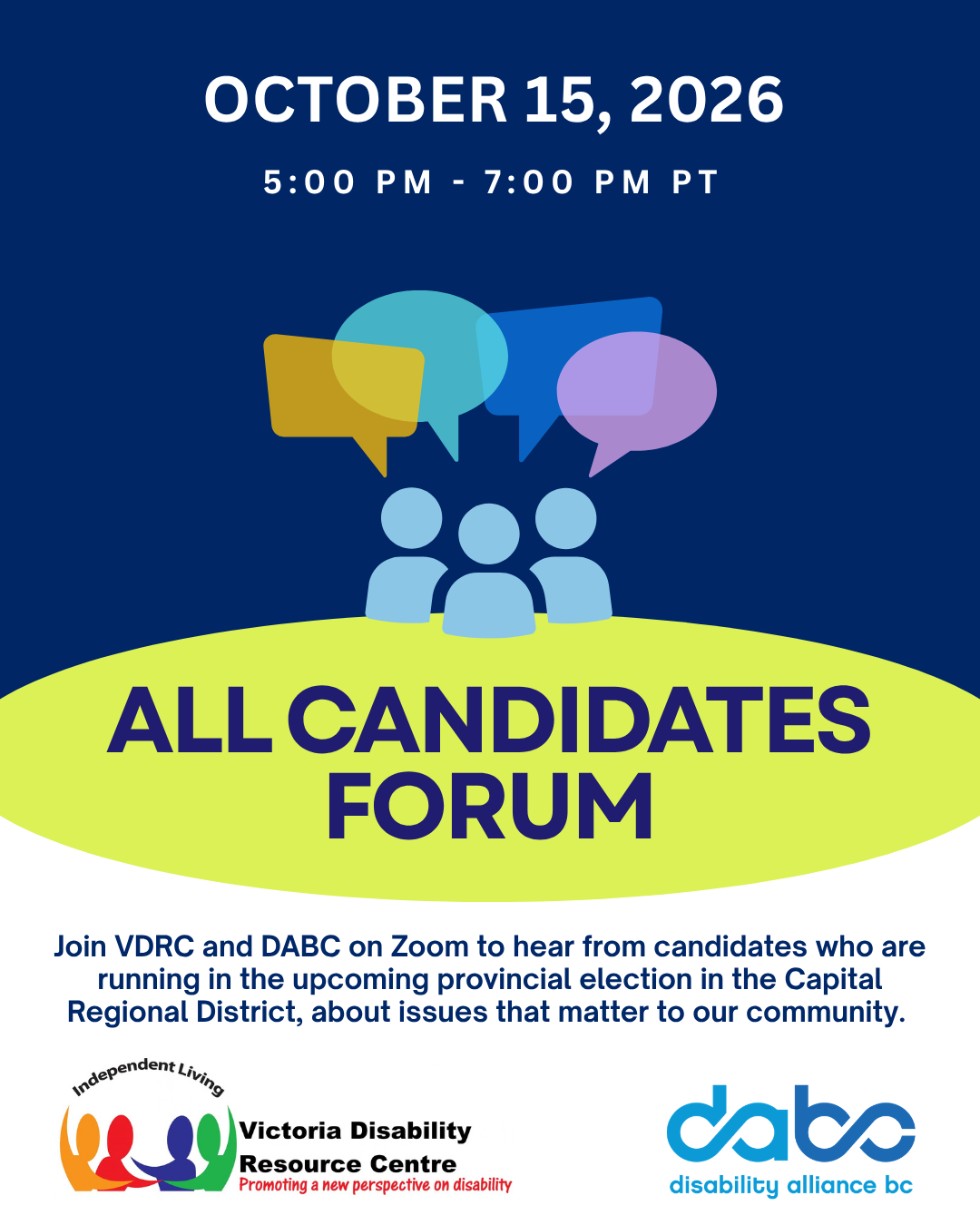
We’re pleased to share that the VDRC and Disability Alliance BC (DABC) will be hosting a virtual All Candidates Forum, during which you will have the opportunity to hear from candidates who are running in the upcoming provincial election in the Capital Regional District.
The forum will focus on issues that have a significant impact on people with disabilities, including PWD disability assistance rates, accessible and affordable housing, and access to health care. Candidates will be asked questions on these topics and given an opportunity to share what they and their parties would do to address them.
Thursday, October 15, 2026 5:00–7:00 p.m PT Via Zoom
For many Canadians with disabilities, applying for the Disability Tax Credit (DTC) can be an important first step toward accessing financial supports and programs. However, there are often barriers to easy access, including financial barriers.
The Canada Revenue Agency confirms that applicants are responsible for any fees their medical practitioner charges to complete a DTC application. While those fees may be claimable as a medical expense on a tax return, that does not help those who need to pay the bill today. For someone living with a disability, that upfront cost can be enough to make an already complicated process even harder.
In 2026, the federal government introduced a new $150 supplemental Canada Disability Benefit payment intended to help offset the cost of obtaining the DTC. This is an important step toward recognizing that the cost of obtaining medical certification can be a barrier. However, the payment is not available for everyone who applies for or receives the DTC. The $150 supplemental payment is only available for people approved for the DTC who also qualify for the Canada Disability Benefit monthly payment.
There are Canadians who may qualify for the DTC but not the Canada Disability Benefit because of the CDB’s eligibility requirements. For those people, the cost of having a medical practitioner complete the application remains an out-of-pocket expense. This is the gap we at Disability Alliance BC are aiming to address.
We’re relaunching our DTC Medical Fees Fund to help reduce one of the financial barriers that stand between a person and the support they may be entitled to access. No one should need to abandon the DTC application process because they can’t afford the medical practitioner fee. Our DTC Medical Fees Fund is designed to help address this gap.
We’re asking our community, supporters, organizations, professionals, and donors to help us build this fund. Every contribution helps remove the financial barrier from someone trying to access the DTC, and your donation can help someone take that next step.
$25 can help us begin building a fund that is there when someone needs it.
$50 can help offset part of a medical practitioner’s fee.
$100 can make a meaningful contribution toward helping someone complete their DTC application.
$250 or more can help us support multiple applicants.
You can also help us spread the word about this fund to your friends, families, and networks. Together we can help remove the financial barriers that stand between Canadians and the supports available to them.
For many Canadians with disabilities and their families, the Disability Tax Credit (DTC) and Registered Disabilities Savings Plan (RDSP) may seem complicated and out of reach. Understanding how these programs work together can make a meaningful difference for planning for the future.
Throughout RDSP Awareness Month in 2026, we’ll be exploring the theme: there’s more to the DTC and RDSP than you think.
The Disability Tax Credit is more than just a tax credit; it can open doors to other federal programs and benefits, including access to the RDSP. The RDSP is also more than just a savings account; it’s a long-term financial planning tool designed to help people with disabilities build financial security, with government grants and bonds adding to personal contributions.
There are also important details that many people just don’t know: eligibility rules which are changing in 2027 to make access easier, contribution and withdrawal strategies, government incentives, beneficiary and holder considerations, deadlines, and special provisions for people whose circumstances may change (for example, those with shortened life expectancies).
This month, we seek to make these programs easier to understand and help British Columbians ask better questions. Whether you are a person with a disability, a parent or caregiver, a family member, a financial professional, service provider, healthcare provider, or someone supporting a friend or loved one, RDSP Awareness Month 2026 is an opportunity to look beyond the basics and discover what you may have been missing.
Follow our social media and check our blog throughout the month to learn more.
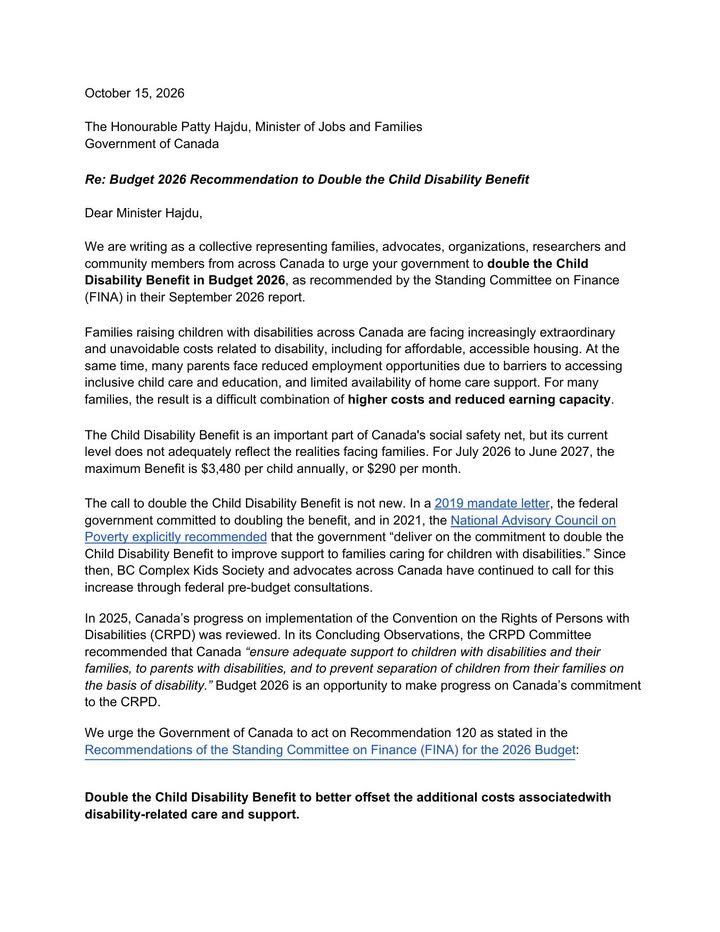
DABC has joined a collective representing families, advocates, organizations, researchers and community members from across Canada in signing on to a letter to The Honourable