Report: “Access for Everyone? Publicly Operated HandyDART”
A new report called “Access for Everyone? Publicly Operated HandyDART” was released last week. It shows TransLink’s HandyDART contractor is failing to meet the demand for HandyDART services. The report found that in 2022 TransLink provided just half the HandyDART service per senior as it had in 2008. Read the press release and full report here: https://ecoplanning.ca/wp-content/uploads/2023/05/Access-for-Everyone-media-release-2023-05-02.pdf
DABC is endorsing the report. Along with unions, climate, and seniors groups, we call on TransLink to bring HandyDART in house and operate the service directly, instead of contracting it out to private businesses. We believe this will improve services.
The Vancouver and District Labour Council is seeking speakers with experience using HandyDART who are willing to speak at an upcoming mayors’ meeting, in support of Translink providing HandyDART services directly. Please contact DABC if you want to speak at the mayors’ meeting, or you can register here: https://www.translink.ca/about-us/about-translink/mayors-council-on-regional-transportation#speaking-at-mayors-council-meetings.
Editorial by Jana Husseini from the Parenting with Disabilities edition of Transition magazine
This article was written by Jana Husseini, and originally appeared in the edition of DABC’s Transition magazine, Parenting with Disabilities (Spring 2023). The text below is only an excerpt. Read the full issue here.
When my husband Mustafa and I started to think about a family, we had so many questions. As a woman with spina bifida, could I be a mother? Could I even conceive? What about all the social and environmental barriers for someone living with a disability?
On top of all that, there were some prejudiced misconceptions that women with disabilities are not capable of having a family.
But, our desire for a child was strong. We talked and talked about our fears and our hopes.
When I went looking for answers, it was my family, friends and peers who are mothers who taught me the most. One friend, a mother with quadriplegia, walked the path of motherhood before me. She and other women I knew convinced me I could follow.
A Learning Experience for Everyone
I looked for community resources and supports for me and Mustafa. One of the best I found was the Spinal Cord Injury of BC Sexual Health Centre. So many of my questions about pregnancy and motherhood were answered. We were so grateful for their practical and respectful support.
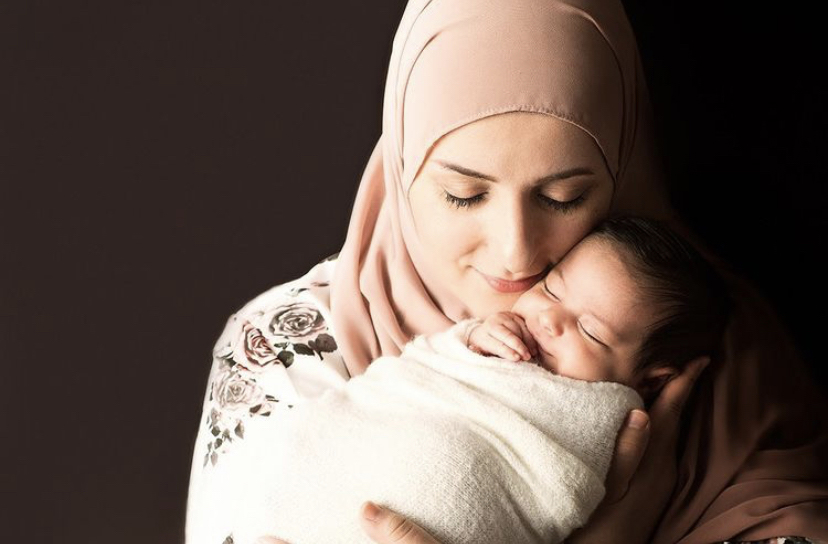
On the day I learned I was pregnant with Malika, we were filled with joy. Our journey toward growing our family had begun.
Researching and navigating the health care system as an expectant mother with a disability showed me a lot. As an advocate, it showed me even more.
All along the way, I had to advocate for myself within a system that wasn’t very prepared for a mother with disabilities.
On the other hand, I found many health professionals who were knowledgeable and compassionate. They wanted to find ways to support me, even when the system was not set up to do so.
My first pregnancy exam, for example, was done in a hospital rather than my gynecologist’s office because she didn’t have an accessible exam table. After having me as a patient, she got one.
I could not find any training specifically for mothers with disabilities, but I learned a lot from the Healthiest Baby Possible program for first time mothers.
What’s Missing?
I would love to see more understanding of the needs of mothers living with disability, whether it is a physical, mental health or other kind of disability.
When I was in the hospital to deliver Malika, my gynecologist held a meeting for all of the staff who would be involved. She wanted to be sure they understood as much as possible about the care and support I would need.
A central hub for parents with disabilities would be wonderful. I was able to find many resources on my own, but a one-stop resource would be a great support to parents. There are so many things to understand from pregnancy, to delivery, to the legal steps, to taking the child home.
There were times I was completely overwhelmed. A hub could provide new parents with care before and after delivery, access to a peer group of moms, in-home support, information and referral, and counselling.
The biggest gap for me was that I didn’t have any support after the delivery. The care and professionalism I experienced during pregnancy and delivery was amazing. Post-delivery, the only outside support I had was an Occupational Therapist who made sure my bassinet was accessible.
After the delivery, I was very depressed. I was completely on my own with Mustafa. I wasn’t ready to go home, but the hospital wanted me to vacate the bed.
Advice To Prospective Parents
If you are considering starting a family as a parent living with disability, I have these suggestions for you.
Be very informed about your own health. This includes your disability. Sometimes health professionals make suggestions that will not work for someone with your disability.
Be your own persistent advocate. You may not get all the information or support you need, unless you ask for it.
Research. Do your own research about programs and services, and talk to people. Peers are often the very best source for information and tips.
Educate everywhere you go. Chances are you will find many health professionals who do not know much about your disability, but are willing to learn.
In this Transition, you will read about how other people with disabilities are living and thriving as parents, even though we have all shared many of the same concerns and fears. We have also gathered lots of resources to help parents, no matter what kind of disability you may be living with.
We hope you find this edition helpful and even inspiring, whether you are already a parent or are considering starting a family.
Jana Husseini is an advocate with DABC’s Access RDSP program.